

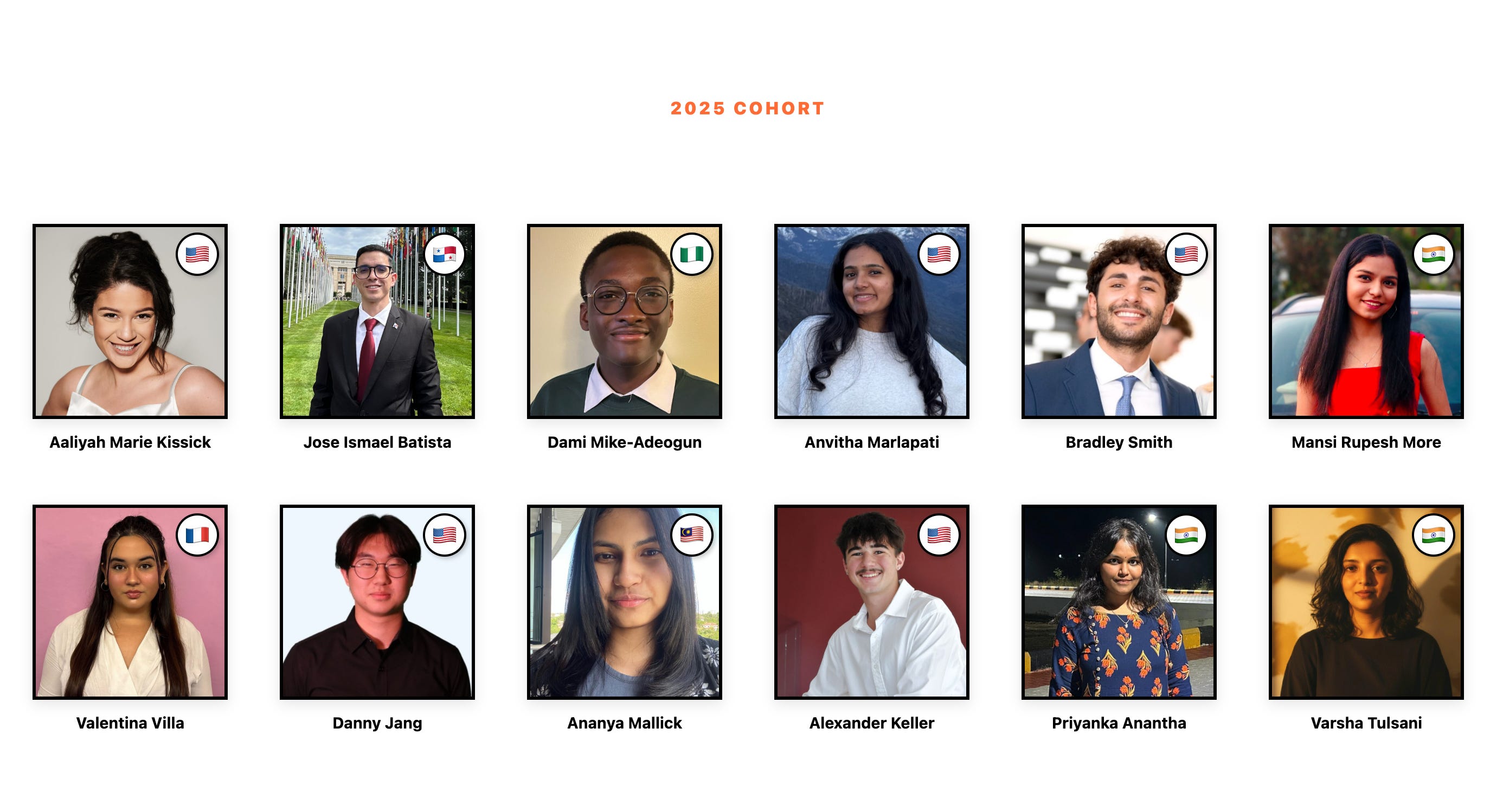
Each year, FinMango selects a cohort of ambassadors to amplify the voices of young adults and to share perspectives about what financial health looks like across global communities.
Today’s guest writer is ambassador Bradley Smith from the United States. Bradley is a recent Kent State graduate in finance with a minor in international business. An aspiring entrepreneur driven by a passion for business and financial literacy, Bradley is dedicated to making a meaningful impact in the world.
Managing Money Across Countries and International Banking Challenges

I had never left home and suddenly, I was moving across the world alone.
In August 2023, I boarded a flight from Ohio to Florence, Italy. I hadn’t traveled much growing up, so I had no idea what to expect. It was my first time truly stepping into the unknown: no safety net, no familiar faces, and no real plan for what was ahead. Everything felt foreign. The language, the food, the daily rhythm of life… and especially the way people handled money.
One of my first challenges was figuring out which credit cards actually worked. Sounds simple, but only one of mine didn’t rack up ridiculous fees with every transaction. Back home, we never think twice about this. Tap your card and move on. But in Italy, every swipe felt like a gamble. Would it work? How much extra was I paying?
The tipping point came on a short weekend trip when I needed cash. I stopped at an ATM, withdrew a couple hundred euros, and thought nothing of it… until I checked my bank account later. Nearly $20 gone! Just for the privilege of accessing my own money. Conversion rates, foreign transaction fees, ATM charges…all of it piles on.
I wasn’t buying anything. I was just trying to use what I already had. And that’s when it hit me: managing money across borders is clunky, expensive, and unnecessarily complicated.
That ATM fee was eye-opening. I realized how dependent we all are on banks, how easily access to our own money can be interrupted, and how expensive it is to transfer cash simply because we cross a border.
Before that moment, I believed in Bitcoin and cryptocurrency in theory but I was still skeptical like many others. That day changed it. It made the case for crypto real.
With Bitcoin, there’s no bank to “approve” your transaction, no middleman stacking fees, no arbitrary limits because you’re in another country. You can send or receive value 24/7, anywhere in the world, in minutes. The blockchain doesn’t close for weekends or holidays, and it doesn’t care about your location.
Instead of paying $20 in hidden fees just to take out my own cash, I could send Bitcoin to a friend, a business, or even myself instantly, often for pennies. The value is borderless. One Bitcoin in Ohio is the same as one Bitcoin in Florence.
Of course, crypto has its challenges. Prices fluctuate. You have to secure your wallet. You still need to know how to convert it when needed. But the core idea…” money without borders” suddenly made perfect sense to me. I didn’t have to imagine the problem anymore. I’d lived it.
Who would have thought that living in such an ancient city, surrounded by centuries of history, would lead me to rethink the future of money?
Italy’s Financial Landscape and Entrepreneurial Funding Limitations

When I lived in Italy, my classes were incredibly small. My largest had only six students. Some people would hate that, but I absolutely loved it. One of my favorites was an International Business course taught by a local professor from Florence. The class was just me, her, and one other student. Creating an environment where conversations would go far beyond the textbook.
A few weeks into the semester, during one of our afternoon discussions, my professor shared something that shocked me. She told me several of her students, all young, talented, and full of ideas — may have to leave Italy to start their tech businesses in the U.S.
Not because they wanted to leave home. Not because they thought America was “better.” But because they had no choice.
“They couldn’t get funding here,” she said, almost with a sigh. “The system doesn’t support that kind of ambition.”
I had never truly considered how different countries’ financial systems can shape and limit the course of someone’s life. In the U.S., the idea of launching a business, raising capital, and chasing a dream is practically baked into our culture.
There’s an entire ecosystem that celebrates risk-takers and funds bold ideas. Just look at Silicon Valley: venture capitalists, angel investors, incubators, and accelerators are all designed to find and fuel the next big thing. Even if that means losing millions along the way to find the next “Unicorn Company.”
But in Italy, that same entrepreneurial spark could hit a wall before it even catches fire. Great ideas often stay ideas, not because of lack of talent or passion, but because the funding pathways simply aren’t there. The market for capital is smaller, the appetite for risk is lower, and bureaucracy can slow things to a crawl.
It made me ask questions I’d never asked before: Why does access to capital vary so drastically from country to country? How much opportunity is really a product of skill and how much is determined by the system you’re born into? What would it feel like to live in a place where ambition is encouraged at every turn versus one where it’s subconsciously discouraged by the lack of support?
That conversation stayed with me. It reminded me that ambition isn’t just a personal trait, it’s also a reflection of the environment you’re in. Some systems build runways for takeoff. Others put up roadblocks. And sometimes, where you start matters just as much as where you’re trying to go. Recognizing that doesn’t diminish hard work; it simply makes you aware of the hidden forces shaping every opportunity.
The cultural shift from “living to work” to “working to live”

America taught me how to work. Europe taught me how to live.
As my time abroad went on during my junior year of college, I kept noticing something: money wasn’t just something people earned or spent, it shaped the way they lived.
In the U.S., I grew up surrounded by a “live to work” mindset. Hustle culture is everywhere. Productivity is glorified. Financial success often defines personal worth. Why? Because we see it in movies, on social media, and in the stories we’re told about success. We’re taught that time is money, and if you’re not moving forward, you’re falling behind. That urgency becomes a way of life.
But in Italy, I saw something entirely different. People still worked hard, but they prioritized long lunches, evening walks, and time with loved ones. They worked to live. Conversations lingered over espresso, stores closed in the afternoon, and no one seemed to feel guilty about taking a break. Money still mattered, but it wasn’t the scoreboard for happiness
Even one of my professors would often joke with us, saying, “You Americans work way too hard.” At first, I laughed it off. Only later did his words start to make sense. He wasn’t criticizing ambition, he was pointing out that when work consumes life, you lose the very things you’re working for in the first place.
That shift in perspective stuck with me. I’ve always been ambitious and goal-driven, often equating progress with work and money. But living in a place where life moved slower and where joy was found in the everyday made me realize how deeply money is woven into the identity of a culture. I started to see that wealth isn’t just measured in a bank account, but also in the time you spend and the relationships you nurture.
And here’s the thing: I don’t think one mindset is entirely right or wrong. The drive and ambition of a “live to work” culture can create incredible innovation and opportunity. The balance and intentionality of a “work to live” culture can protect health, happiness, and relationships. There are seasons in life where one may need to take priority over the other, but too much of either is often detrimental. Life, in many ways, is one big balancing act.
I’m grateful to have experienced both. Seeing the contrast firsthand has given me a perspective I can carry forward, one that has helped me further improve my relationship with money. Financial health isn’t just about having more. Sometimes, it’s about having enough… and knowing how to use it to live meaningfully.
Learn more about FinMango’s ambassador program.